


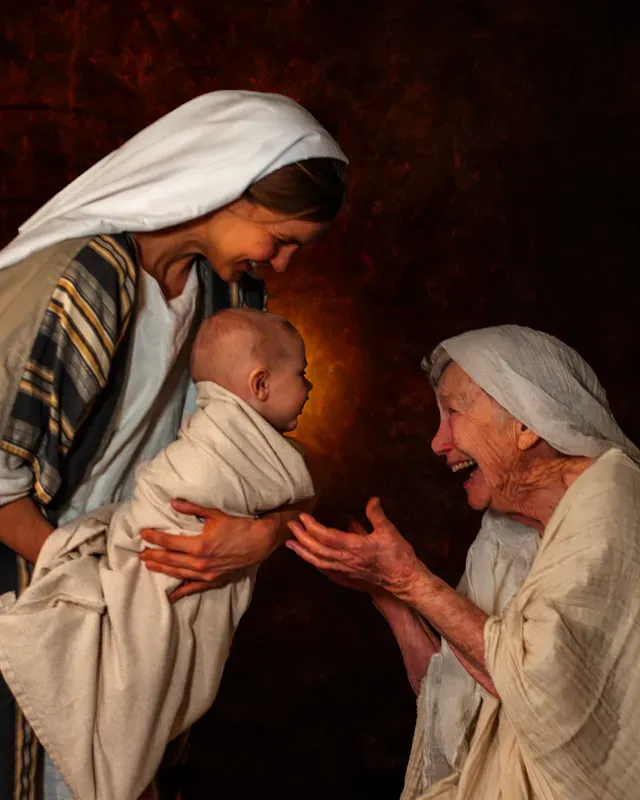
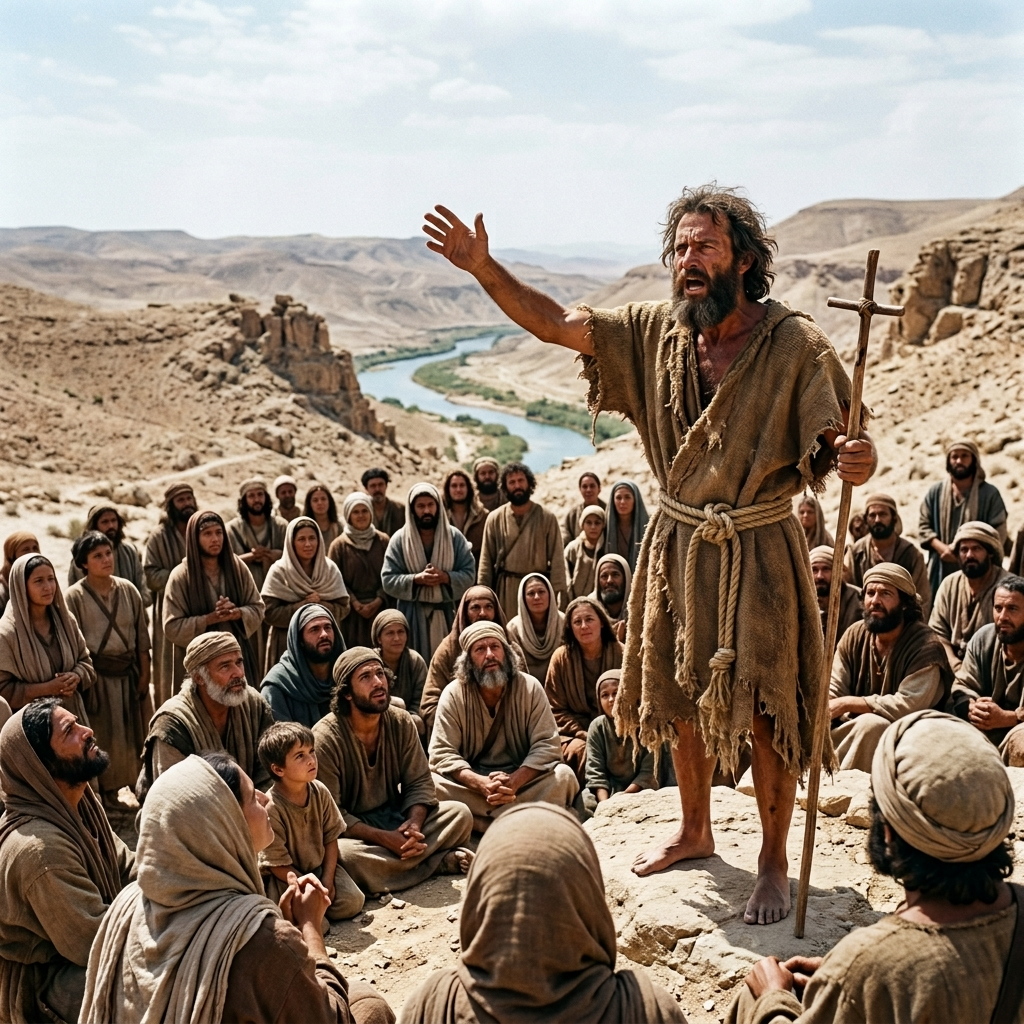
A man who lives in the desert, dresses strangely, eats bugs for dinner, and opens his sermons by calling the crowd “you brood of snakes” probably isn’t who you’d expect God to choose as the forerunner of the Messiah. And yet that’s exactly who John the Baptist was — and exactly why his story matters so much.
Luke chapter 3 introduces us to John’s ministry, Jesus’s baptism, and a genealogy that has puzzled Bible readers for centuries. Let’s work through it piece by piece.
Setting the Historical Scene
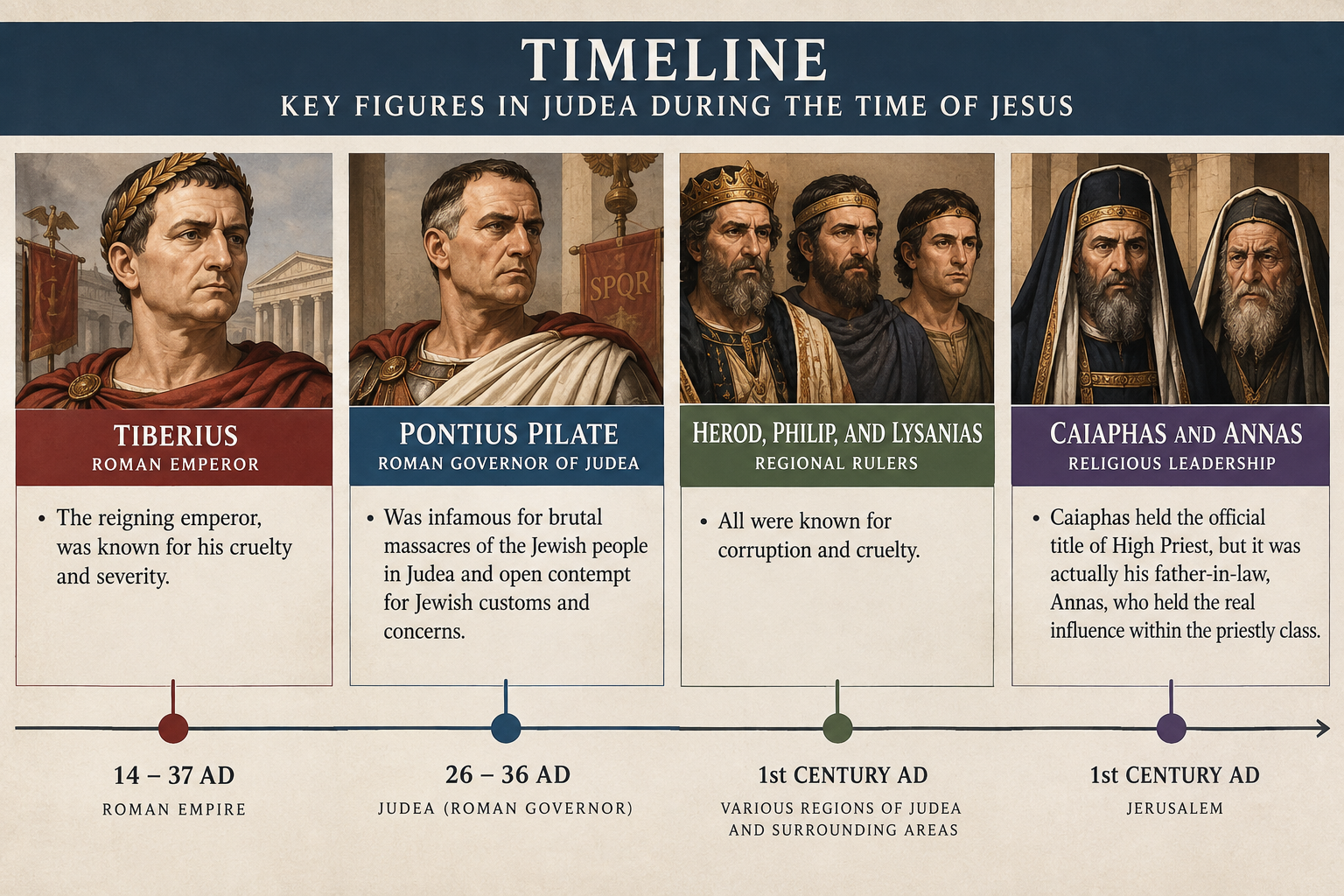
Luke opens this chapter the way a serious historian would — by naming the political leaders ruling the region during Jesus’s life and ministry (verses 1–2a). This isn’t a fairy tale beginning with “once upon a time.” Luke is anchoring the story in verifiable history, and in doing so, he also gives us a sense of just how dark the political and religious landscape really was.
- Tiberius, the reigning emperor, was known for his cruelty and severity.
- Pontius Pilate was infamous for brutal massacres of the Jewish people in Judea and open contempt for Jewish customs and concerns.
- Herod, Philip, and Lysanias — the regional rulers — were all known for corruption and cruelty.
- Caiaphas and Annas represented the religious leadership. Caiaphas held the official title of High Priest, but it was actually his father-in-law, Annas, who held the real influence within the priestly class.
This was the world Jesus stepped into — one led by cruel emperors, corrupt governors, and a religious establishment more concerned with power than godliness.
John the Baptist Begins His Ministry
John had lived in the desert since his youth (Luke 1:80). Now, prompted by the Holy Spirit, he finally stepped into the calling he’d been prepared for his whole life: forerunner to the Messiah (verses 2b–3).
Repentance Is an Action, Not a Feeling
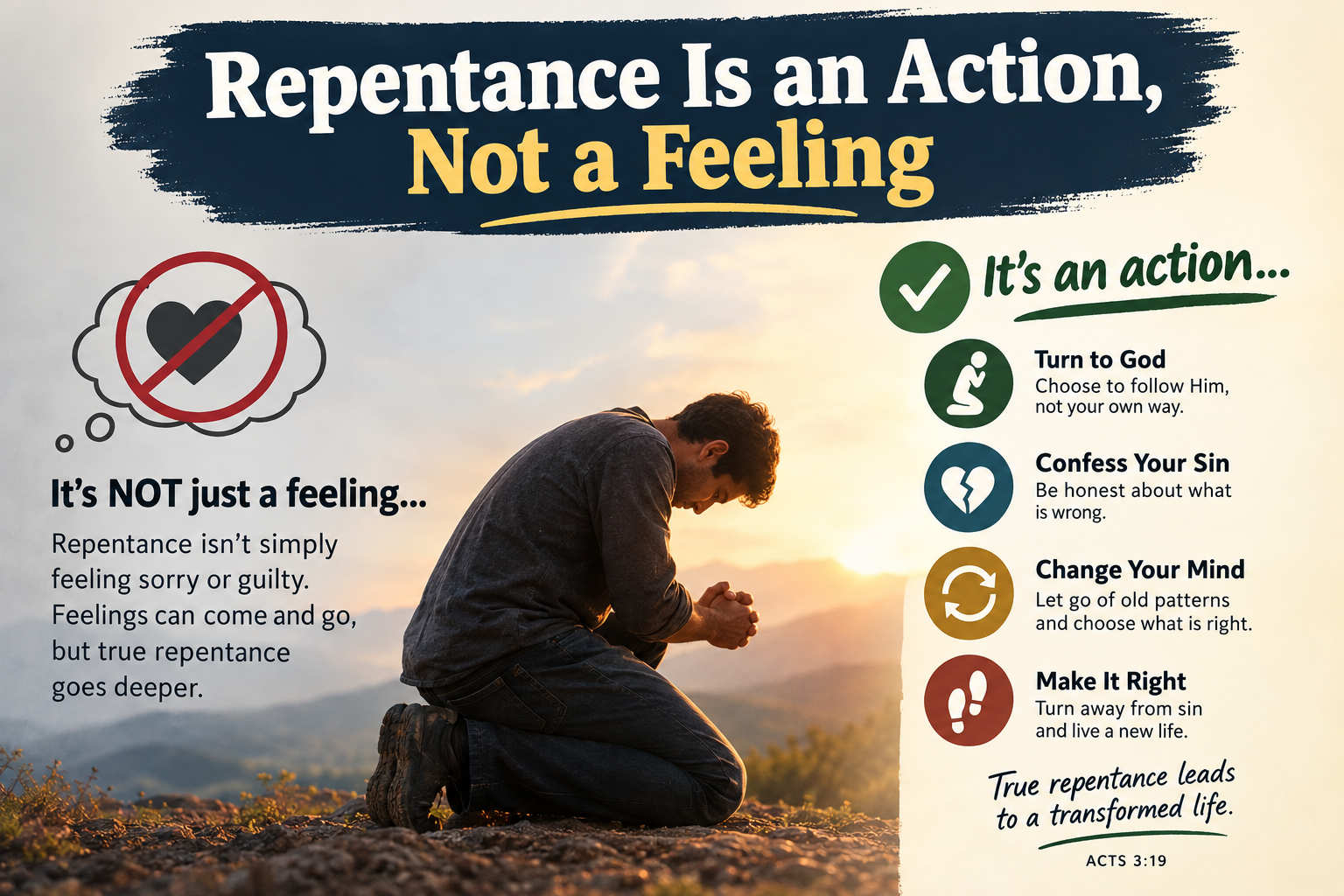
John’s core message was a call to repentance — but it’s worth pausing on what that word actually means. Many people assume repentance is mostly about emotion, about feeling sorry for sin. Feeling sorry is a good thing, but repentance isn’t fundamentally a “feelings” word. It’s an action word.
John wasn’t asking people to feel bad. He was calling them to change their minds and change direction. Repentance is about turning, not just grieving.
Why Jewish Baptism Was So Radical
John’s “baptism of repentance” was different from Christian baptism as we understand it today, where immersion in water identifies a believer with Jesus’s death and resurrection. John’s baptism identified a person’s need to get right with God and be spiritually cleansed.
The ceremony of baptism itself wasn’t unusual — what was genuinely shocking was that Jews were submitting to it. Baptism was a common ritual for Gentiles converting to Judaism. For a Jew to undergo baptism was essentially to admit, “I’m no better than a Gentile outsider.” This was a profound, humbling act of repentance — a radical rededication to God.
The Real Problem Was “Me,” Not “Them”
John’s message (verses 4–6) cut straight through the political grievances of the day. Most Jews at the time believed their biggest problem was external — namely, Roman political oppression. John reframed the issue entirely: the real problem wasn’t “them.” It was each individual’s own need to get right with God.
“You Brood of Snakes”: A Sermon Like No Other
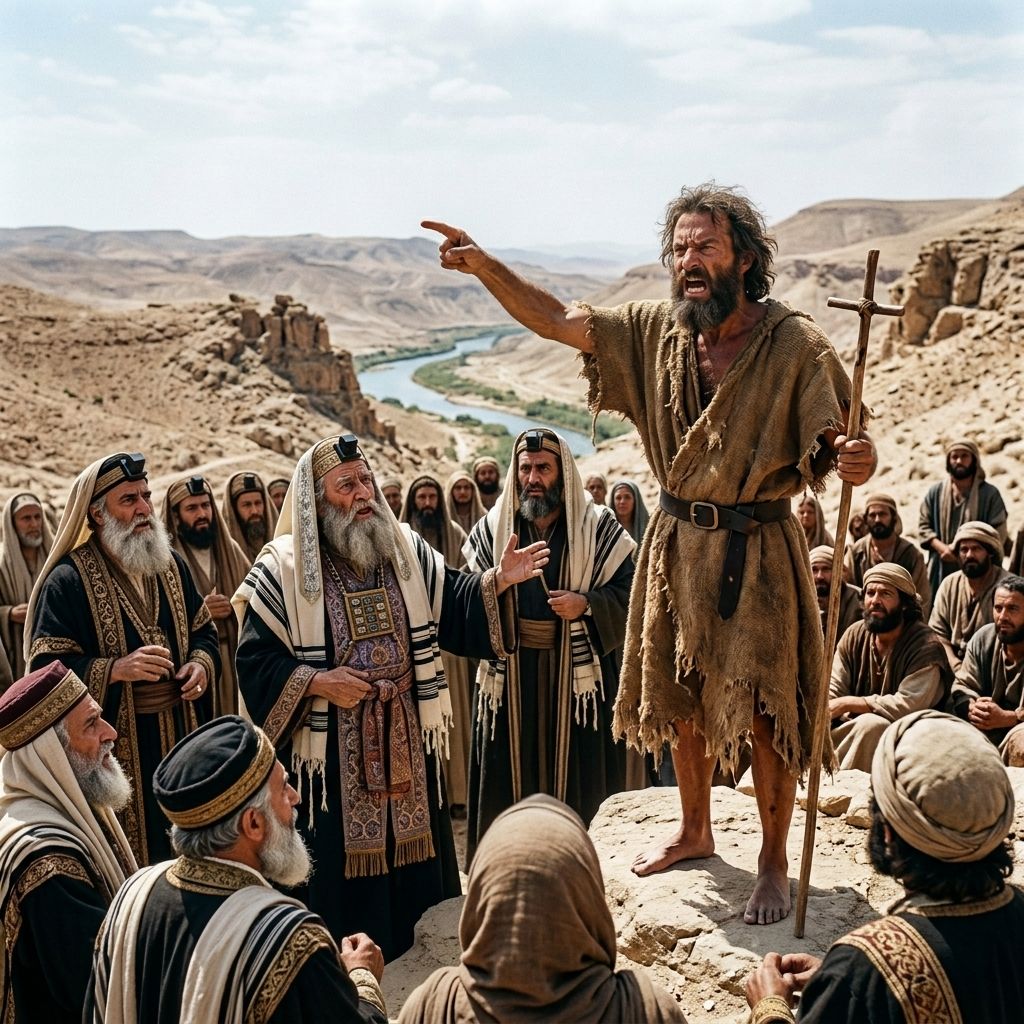
Opening a sermon by calling your congregation a “brood of snakes” isn’t exactly a smooth introduction (verses 7–9). Neither is asking bluntly, “Why are you even here?” But John wasn’t interested in preaching a comfortable message.
Simply put — John was weird. He lived in the desert, wore rough clothing, survived on grasshoppers and wild honey, and preached with startling bluntness. Jesus didn’t send a polished spokesperson with a sharp suit and camera-ready looks to prepare the way. God often chooses the unconventional.
Abraham’s Family Tree Wasn’t a Free Pass
John directly confronted a popular belief of his day: that simply being a physical descendant of Abraham guaranteed salvation. Common teaching held that Abraham’s faith alone was enough to cover all his descendants, and that it was practically impossible for any Jew to end up in hell — some even taught that Abraham himself stood at the gates of hell, ready to pull back any of his descendants who mistakenly wandered toward it.
John dismantled that idea directly, warning that ancestry alone would not save anyone.
It’s worth noting a modern parallel here: many people today carry a similar assumption — that simply showing up to church weekly is enough to secure a place in heaven. John’s warning applies just as much now as it did then.

Practical Instructions for Ordinary Life
When the crowds asked John what they should actually do, his answers (verses 10–14) were strikingly simple:
- Share with those who have less
- Be fair in your dealings with others
- Don’t be cruel or mean-spirited
- Be content with what you have
These aren’t complicated theological instructions — they’re the kinds of things we teach small children. Repentance, according to John, shows up in ordinary daily conduct, not grand spiritual gestures.
Notably, John didn’t tell tax collectors or soldiers to quit their jobs, even though both professions carried heavy moral baggage at the time:
- Tax collectors bought the right to collect taxes at Roman auctions, then profited by inflating what they charged and pocketing the difference — a practice that made them deeply hated.
- Roman soldiers could legally demand labour or service from any citizen, and often bullied people into doing far more than what was required.
John didn’t call either group inherently evil. He simply told them to act honestly within the roles they already held.
“I Am Not Worthy to Untie His Sandals”
John’s growing influence led people to wonder whether he himself might be the Messiah (verses 15–18). Rather than accepting the glory for himself, John redirected all of it toward Jesus.
His statement that he wasn’t even worthy to untie Jesus’s sandals carries more weight than it might seem at first. In the social structure of slavery at the time, tasks were ranked — the most honoured position was something like a cup-bearer, closest to the master, while the lowest task was reserved for the servant who washed guests’ feet and untied their sandals. Jewish teachers of the day held that a rabbi could ask almost anything of his followers — except to remove his sandals. That single task was considered too humiliating to request. Yet John said he wasn’t even worthy to do that much for Jesus.
John also described the Messiah’s coming baptism as one of “the Holy Spirit and fire” — a reference to the outpouring of the Holy Spirit promised as part of the New Covenant and later fulfilled at Pentecost.
His imagery of separating wheat from chaff reflects an actual farming practice of the time: after harvesting wheat, farmers would toss it into the air, often from a hilltop. The heavier wheat kernels would fall back down, while the lighter chaff — the useless outer shell — would blow away in the wind.
John’s warning about “never-ending fire” is also worth noting theologically — nowhere in Scripture is there teaching that the soul is simply annihilated after a period of judgement.
Herod’s Scandalous Marriage
Verses 19–20 briefly mention the tangled, sinful relationship between Herod and Herodias. Herod was Herodias’s uncle, and he seduced her away from his own half-brother. By marrying her, Herod ended up married to a woman who was simultaneously his niece and his sister-in-law — a scandal even by the loose moral standards of the Herodian family.
Jesus’s Baptism: The Trinity on Display
Jesus wasn’t baptised because he was a sinner needing repentance and cleansing (verses 21–22). He submitted to baptism to fully identify himself with sinful humanity.
Luke includes a detail unique among the Gospel writers: this moment happened while Jesus was praying. Luke consistently emphasises prayer throughout his Gospel, and this is no exception.
What follows is a remarkable moment — all three Persons of the Trinity appearing at once. The Holy Spirit descended like a dove, the Father spoke audibly from heaven, and the Son stood in the water being baptised.
The Father’s words — “You bring me great joy” — are worth sitting with. This affirmation came before Jesus had even begun his public ministry. In other words, God’s pleasure wasn’t tied to ministry accomplishments or public impact. It’s a reminder that God is pleased with faithfulness itself, even for someone who never becomes a missionary, preacher, or public figure.
Thirty Years Old: A Meaningful Age
Luke notes that Jesus was about thirty years old at this point (verse 23) — the same age at which a priest was permitted to begin service, according to Numbers 4. This was considered the age of full maturity for ministry.
Two Genealogies: Why Do Matthew and Luke Disagree?
Verses 23–38 present Jesus’s genealogy — and immediately raise an obvious question, since Matthew’s Gospel offers a genealogy that looks quite different.
According to ancient custom, genealogies were almost always traced through the father’s line, not the mother’s — which creates an interesting challenge given the unique circumstances of a virgin birth.
So why the discrepancy between Matthew and Luke? A few explanations have been offered over the years:
1. The wrong answer: “The Bible is just contradictory here.” This doesn’t hold up. Jewish culture placed enormous importance on meticulous genealogical record-keeping. It’s simply not plausible that two separate, carefully documented genealogies of the same lineage would be built in flatly contradictory ways by mistake.
2. The simple answer: Two different parents, two different trees. Matthew traces Joseph’s family line, following Jewish custom, since Jesus was legally adopted into Joseph’s family. Luke, writing for a Gentile audience, instead traces Mary’s family line, since she was Jesus’s biological parent.
3. The complicated answer: Levirate marriage. This theory involves an ancient custom where, if a man died without a son, his brother was expected to marry the widow and produce an heir to carry on the deceased man’s name.
Under this explanation, Melchi (verse 24) and Matthan (Matthew 1:15) were, at different points, married to the same woman. That would make Heli (verse 23) and Jacob (Matthew 1:15) half-brothers. Heli died without a son, so his half-brother Jacob married Heli’s widow — and their son was Joseph. That would legally make Joseph “the son of Heli,” while biologically making him “the son of Jacob.” Under this view, Matthew and Luke are recording the same genealogy — Joseph’s — but Luke follows the legal line of descent while Matthew follows the biological one.
Whichever explanation resonates most, the key point is this: the differences between the two genealogies aren’t evidence of error. They reflect two different, intentional angles on the same story.
The Bigger Picture
Luke chapter 3 is a study in contrasts. A corrupt political and religious system rules the land, yet God raises up a wild desert preacher to call people back to himself. A scandalous king lives in open sin, yet the sinless Son of God steps into the water to identify with sinful humanity. Two genealogies appear to conflict on the surface, yet both faithfully tell the same true story from different vantage points.
The thread running through all of it is this: God doesn’t need polished circumstances, respectable messengers, or tidy explanations to accomplish his purposes. He works through wilderness prophets, humble carpenters, and imperfect family trees to bring about exactly what he intends.
As you study Luke 3, consider reflecting on John’s call to repentance in your own life — not as a feeling to summon, but as a direction to actively turn toward.