


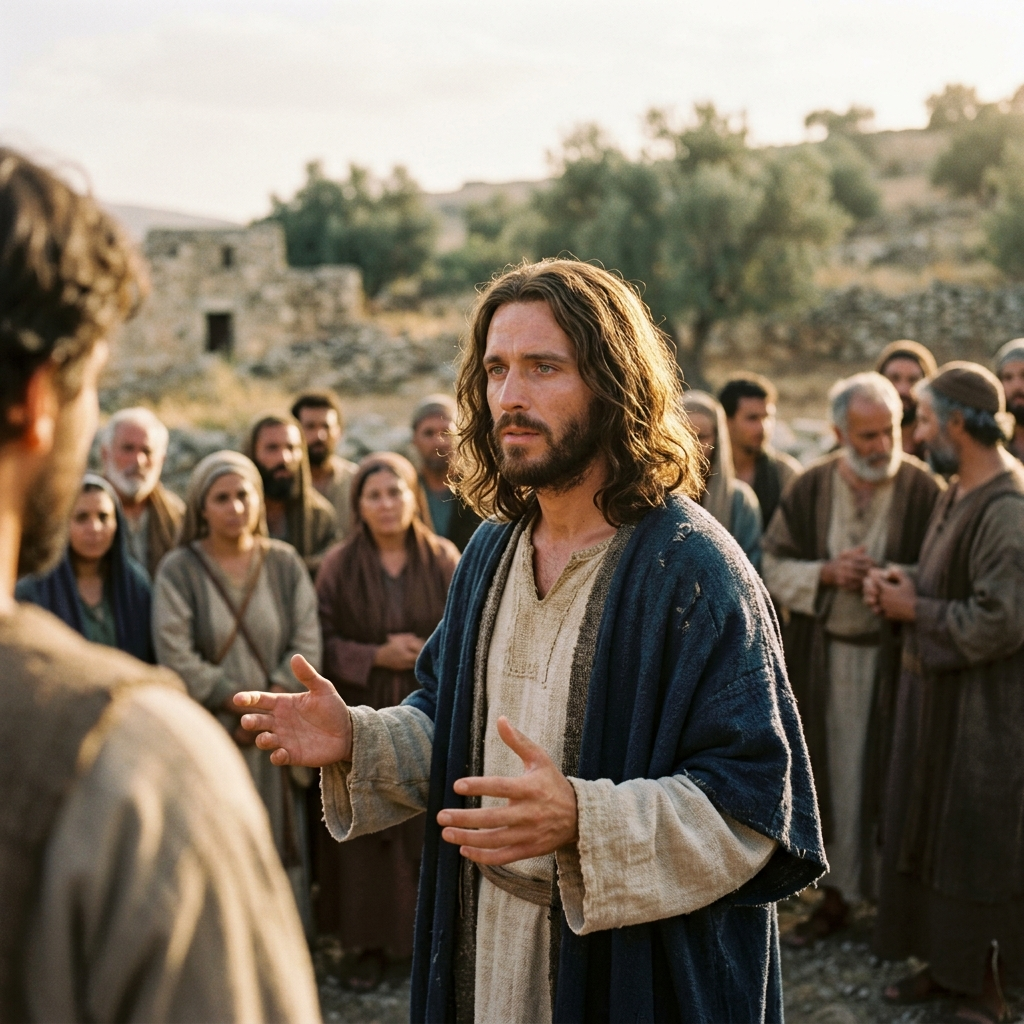
What would you expect to happen the moment Jesus goes public with his identity? A warm welcome from his hometown, perhaps. Instead, Luke chapter 4 gives us a wilderness showdown with Satan, a sermon that nearly gets Jesus thrown off a cliff, and a demon that recognises him faster than his own neighbours do.
This chapter marks a major turning point — Jesus moves from private preparation into public ministry. But before he heals a single person or teaches a single crowd, he first has to face down the devil himself.
Full of the Spirit, Led Into the Fight
Luke opens by reminding us that Jesus was “full of the Holy Spirit” (verses 1–2) — a phrase we already saw connected to his baptism. This doesn’t mean Jesus lacked the Spirit before this moment; rather, he was now filled and empowered in an unusual, public way.
It’s worth pausing on something important here: for the most part, Jesus lived his life and carried out his ministry as a Spirit-filled man. He chose not to lean on the resources of his divine nature, but instead willingly limited himself to what could be accomplished through the Father’s guidance and the Holy Spirit’s power.
Why the Wilderness?
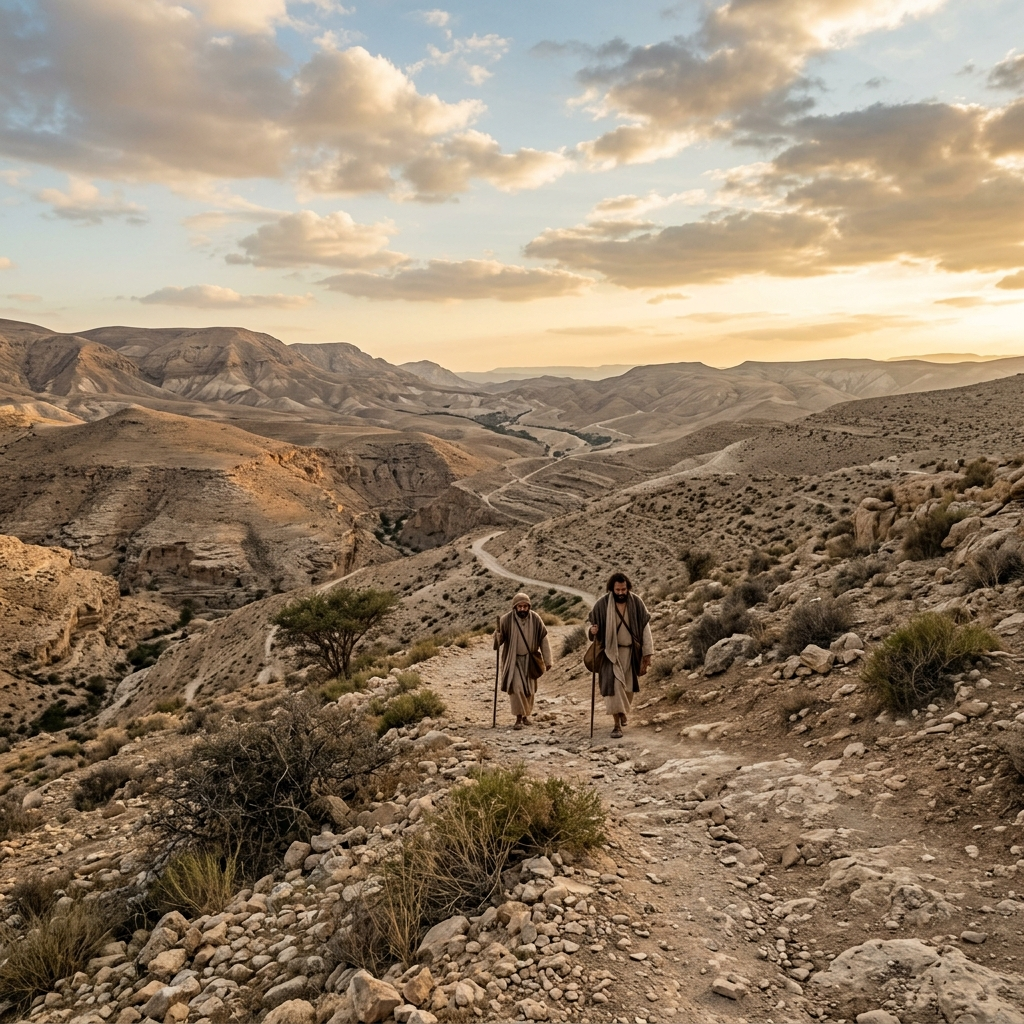
It’s a fair question — why would Jesus be led into the wilderness to be tempted, rather than simply facing temptation at home? Scripture elsewhere notes that demons seem drawn to wild, deserted places (see Matthew 12:45 and Luke 8:27). Jesus wasn’t looking to avoid the fight; he was heading straight into the territory where Satan was most comfortable, far from the safety of family or the temple.
Temptation One: Turn Stones Into Bread
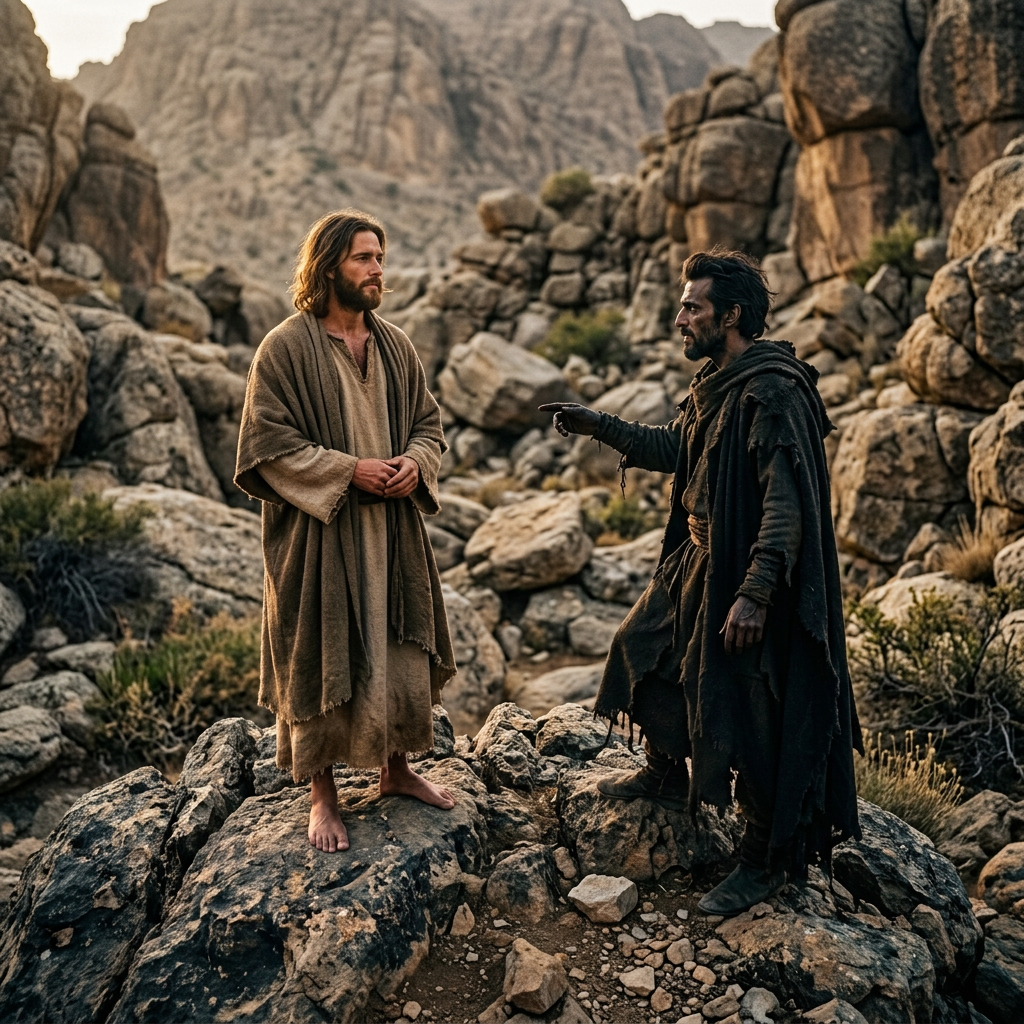
Satan’s opening line — “If you are the Son of God” — is better understood as “Since you are the Son of God” (verses 3–4). This wasn’t an attempt to plant doubt about Jesus’s identity. Satan wasn’t questioning who Jesus was; he was daring Jesus to prove it.
A quick note on setting: the “wilderness” here wasn’t a sandy desert like we might picture. It was scrubland scattered with limestone rocks — rocks that, especially to a hungry man, might well resemble loaves of bread.
Satan’s temptation was straightforward: use divine power for a selfish, self-serving purpose. It’s the same basic strategy that worked on the first Adam — tempting him through food — so Satan tried it again on the second, sinless Adam. The underlying pitch was something like: “Since you’re the Messiah, why are you living in deprivation? Do something for yourself.”
Jesus responded with Scripture — Deuteronomy 8:3 — not with some elaborate display of spiritual power unavailable to the rest of us. He fought this battle with the same weapon available to every believer today: the Bible.
Temptation Two: All the Kingdoms of the World
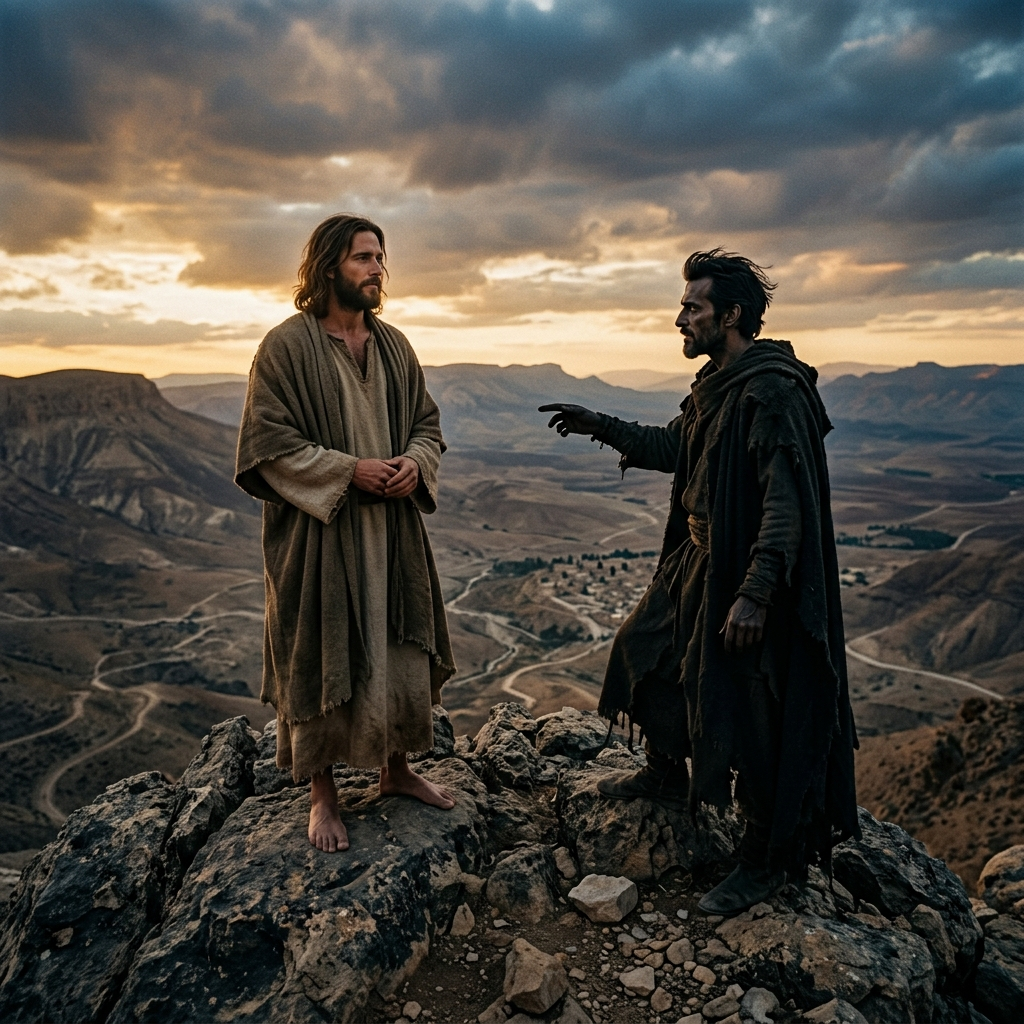
The second temptation (verses 5–8) is best understood as a spiritual vision rather than a literal physical view. The experience and the temptation itself were entirely real, but there’s no mountain on earth tall enough to literally display every kingdom in the world.
Satan claimed authority over the earth’s kingdoms — and notably, Jesus never disputed that claim. It’s a sobering thought: Adam and his descendants were given dominion over the earth by God, and through the fall, that authority was effectively forfeited to Satan. Given that, it shouldn’t surprise us when we see ungodly people holding positions of power and prestige — Satan can hand out authority to whoever he chooses.
The Father’s plan for Jesus involved suffering first, glory second. Satan offered a shortcut — power and authority without the cross. Once again, Jesus countered with Scripture, this time quoting Deuteronomy 6:13. He understood exactly what his Father’s will required of him, including the road to the cross.
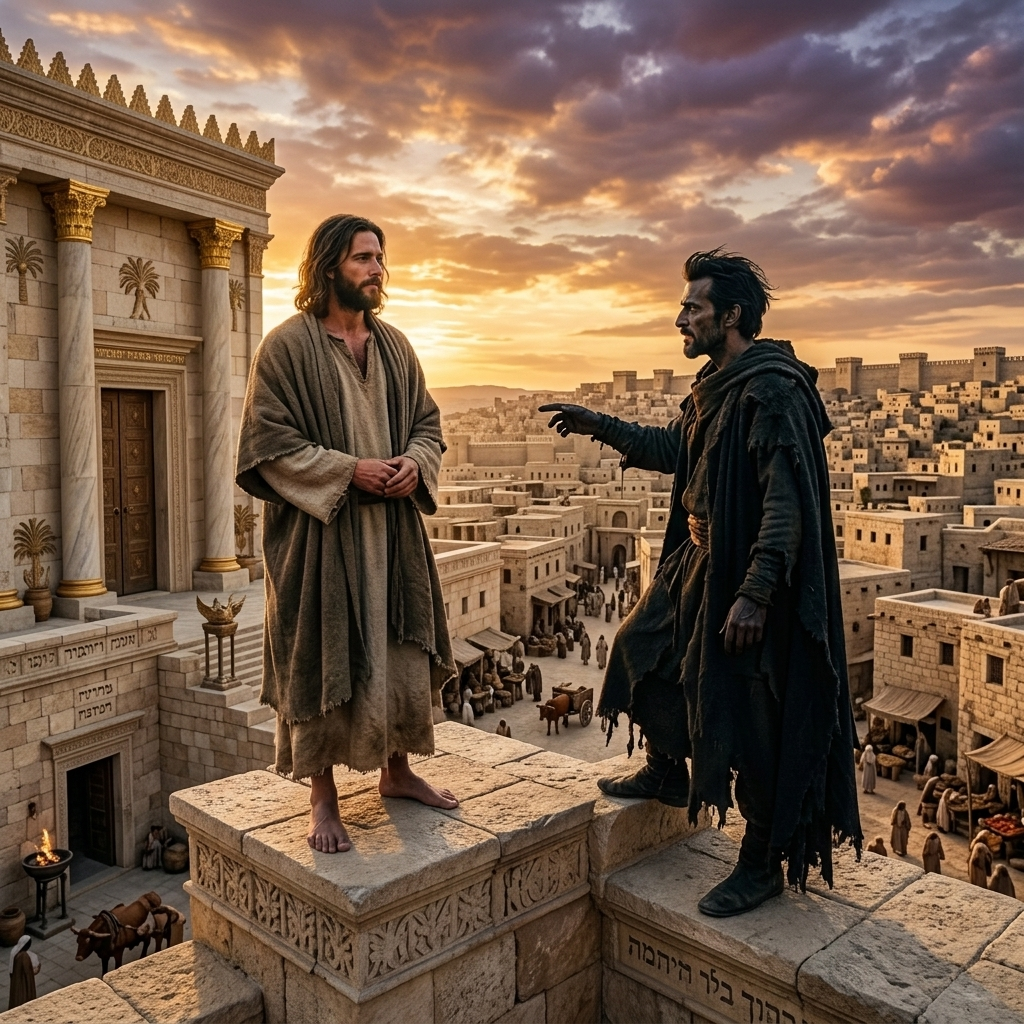
Temptation Three: Jump From the Temple
For the third temptation, Satan took Jesus to a prominent height overlooking the temple mount — a drop of hundreds of feet to the rocky valley below (verses 9–13). Satan couldn’t push Jesus off himself; all he could do was suggest it, tempting Jesus to throw himself down.
This time, Satan tried a new tactic: quoting Scripture. He cited Psalm 91:11–12 — a reminder that Satan is no stranger to the Bible and knows exactly how to twist verses out of context. It’s worth sitting with that for a moment: plenty of people today will trust anyone who quotes a Bible verse, as though quoting Scripture automatically means someone understands or represents God’s will. Satan’s example proves otherwise.
Jesus responded with the proper use of Scripture, quoting Deuteronomy 6:16. He recognised that Satan was inviting him to take a so-called “step of faith” that would really amount to testing God in an ungodly way — essentially demanding a spectacular but pointless miracle just to prove a point.
It’s commonly believed these three temptations were simply the highlights of a much longer ordeal Satan put Jesus through. Interestingly, in all three responses, Jesus quotes from Deuteronomy — a book centred on Israel’s first entry into the Promised Land and all the temptations they would face there. Jesus, facing his own wilderness test, draws directly from the same well.
Back to Nazareth, With No Opposition Yet
At this early stage, Jesus’s ministry centred on teaching, and he faced no organised opposition (verses 14–15).
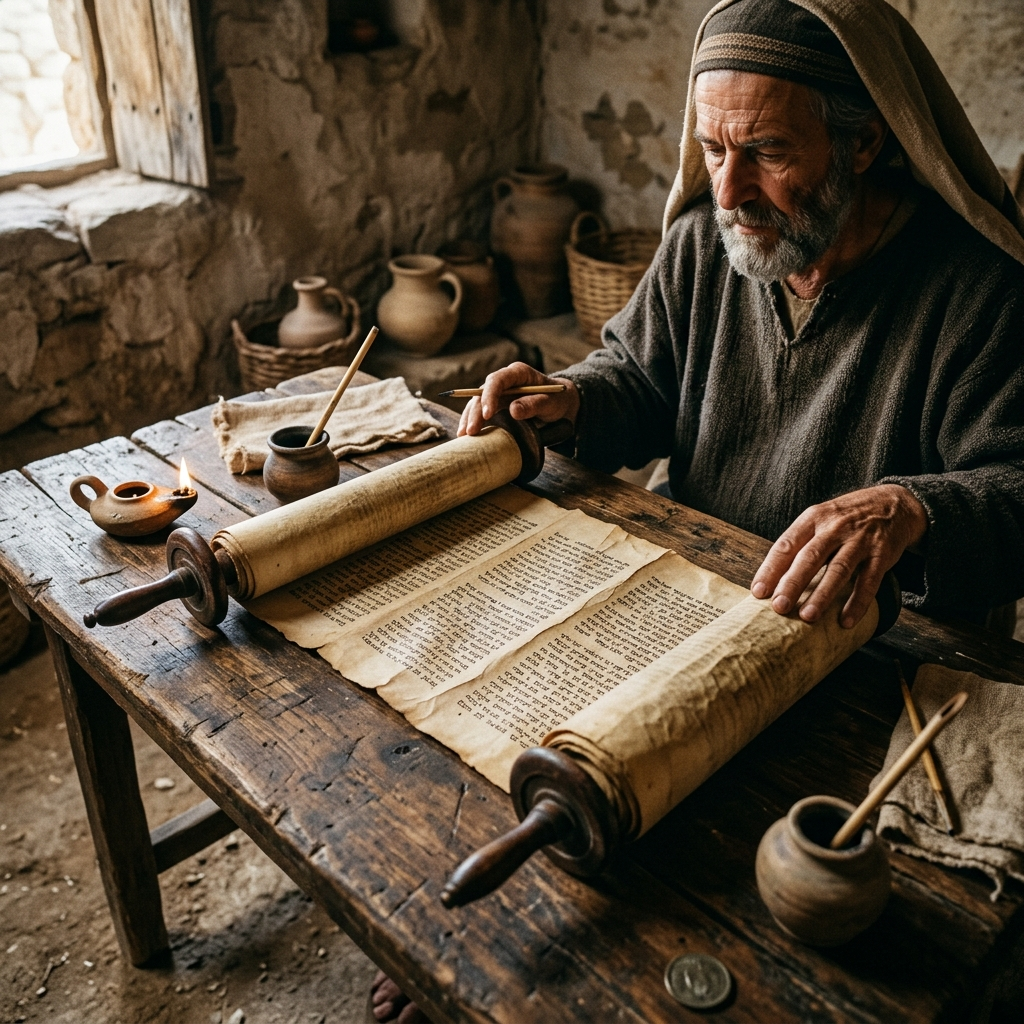
Reading the Scroll in His Hometown Synagogue
By this point, Jesus had already relocated from Nazareth to Capernaum, so the people of Nazareth knew him well — he’d likely worked as a carpenter for many of them personally (verses 16–17).
The synagogue service followed a familiar structure: an opening prayer and praise, followed by an assigned reading from the Law, then the Prophets, and finally a sermon. Through this reading cycle, congregations worked through the entire Torah over the course of a year. It’s worth noting: it’s no small thing that Jesus happened to be handed the very passage he was, on the very Sabbath he stood up to read in his hometown synagogue. God’s timing was clearly at work.
“The Spirit of the Lord Is Upon Me”
The passage Jesus read from Isaiah describes “the Anointed One” — someone who has had oil poured or rubbed on their head as a mark of being set apart and holy for God (verses 18–19). “Anointed One” translates to Messiah in Hebrew and Christ in Greek.
There’s a striking layer of meaning here tied to the Jewish calendar. Under the Levitical law, Israel observed a Jubilee year once every fifty years — a time when debts were cancelled, slaves were freed, and everything essentially reset. It’s believed Jesus began his ministry during a Jubilee year, fitting perfectly with his mission to set things right and start anew.
Where Jesus chose to stop reading is theologically significant. The Isaiah passage continues on to describe events tied to Jesus’s second coming — “the day of God’s anger against their enemies.” Jesus stopped short of that line, effectively pausing mid-sentence at a comma that has now stretched across roughly 2,000 years, separating his first coming from his second.
“This Scripture Is Fulfilled Today”
Rather than returning to his seat after reading, Jesus sat down to teach — the posture of a rabbi about to instruct (verses 20–22). The congregation waited, wondering how he would explain what he’d just read.
His answer addressed two questions at once:
- “Who did Isaiah write about?” — Jesus’s answer: “Isaiah wrote of me.”
- “When will this happen?” — Jesus’s answer: “Isaiah wrote of now.”
The crowd was initially amazed by “the gracious words that came from his lips” — his teaching was genuinely full of grace, and the congregation could sense the goodness of God radiating from this young man. But that initial amazement didn’t last. It quickly curdled into resentment: how could Joseph’s son — someone they’d watched grow up — speak with such authority and claim to be the Messiah?
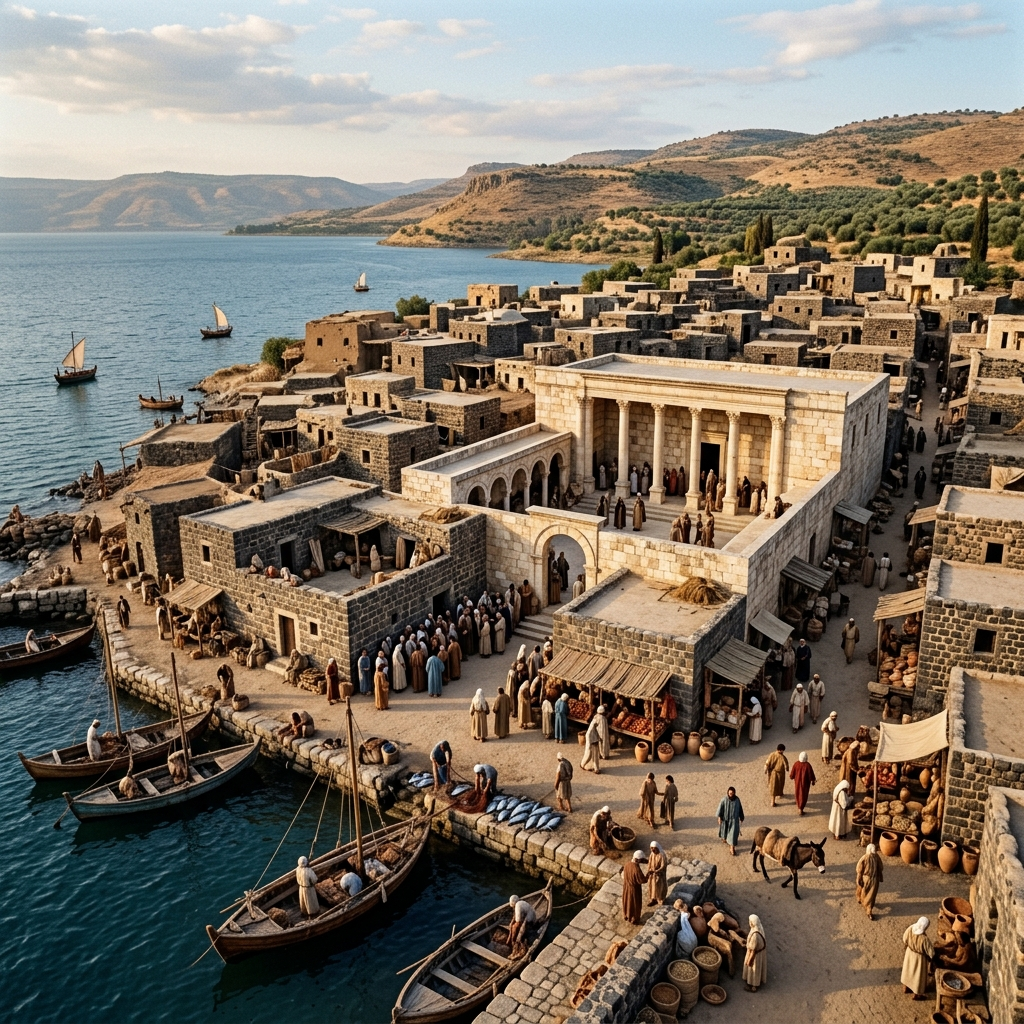
Rejected in His Own Hometown
Jesus had already performed miracles in Capernaum (referenced elsewhere, such as the wedding at Cana in John 2, though Luke doesn’t record it directly), and the people of Nazareth wanted the same kind of spectacle — demanding a sign or a show (verses 23–24). Jesus understood something important here: it’s often easiest to doubt God’s power precisely among the people who know you best. Because Jesus seemed so ordinary and familiar to the people of Nazareth, it was easier for them to reject him.
A Message for the Gentiles Too
Jesus went on to remind them (verses 25–27) that God had performed miracles for Gentiles in the past — a pointed reminder that God’s favour was never meant to be exclusive to the Jewish nation alone.
Nearly Thrown Off a Cliff
This wasn’t the response anyone expects to a sermon (verses 28–30). The crowd was furious — first, that Jesus refused to perform a miracle on demand, and second, that he’d implied God’s love extended to Gentiles as well. It was too much for them to bear. They grabbed him and moved toward carrying out a stoning.
The process, gruesome as it sounds, followed a specific pattern: the accused would be taken to a small cliff roughly twice the height of a man, pushed off by the accusers, and if he survived the fall, stoning would begin — finished off by dropping a large boulder or slab onto his chest.
But Jesus simply walked through the crowd and went on his way. They’d wanted a miracle — and in a sense, they got one, just not the kind they were expecting.
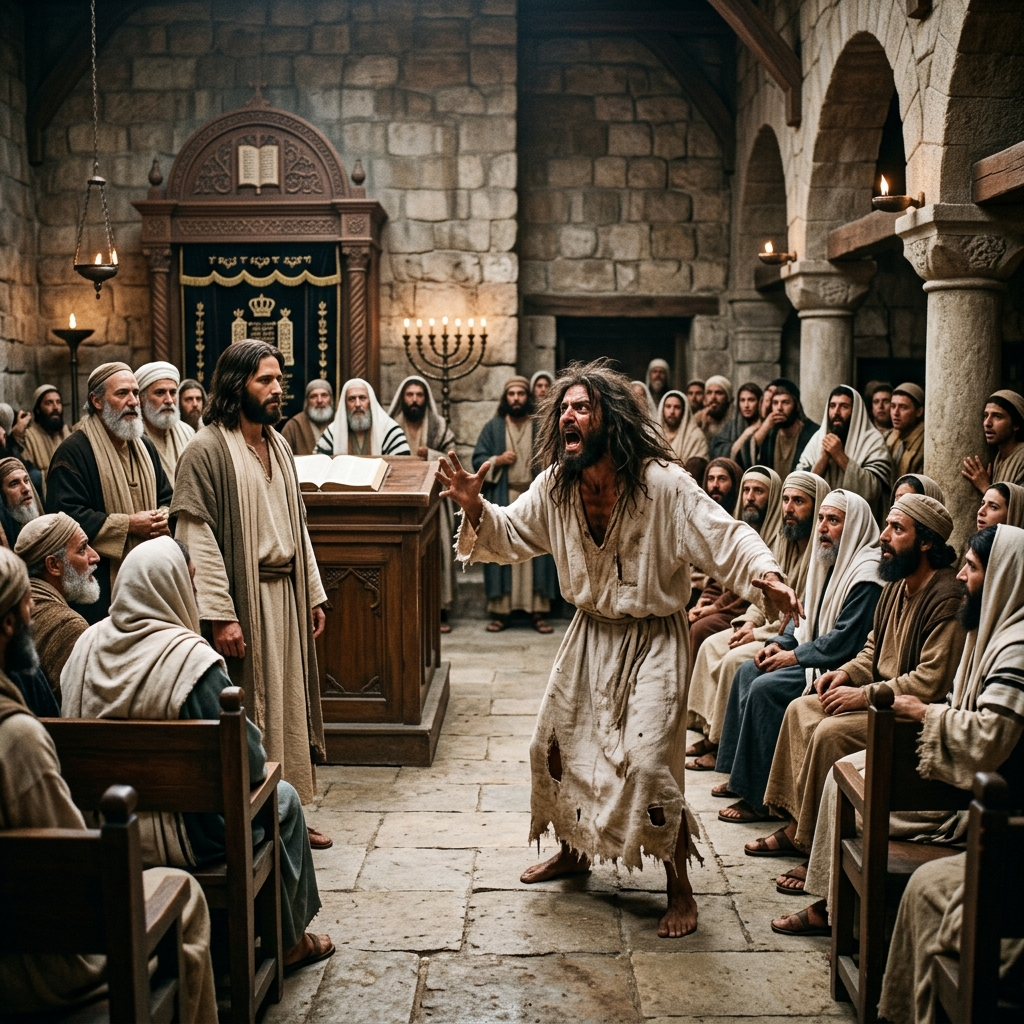
A Demon Recognises the Messiah
Luke doesn’t tell us the specific content of Jesus’s teaching in Capernaum, but he does tell us its effect — the people were amazed, having never heard anyone teach quite like this before (verses 31–37).
In the middle of the synagogue, a man possessed by an unclean spirit cried out, recognising Jesus immediately: “What have we to do with you, Jesus of Nazareth? Have you come to destroy us? I know who you are — the Holy One of God!”
There’s a striking irony here: a demon recognised Jesus for who he truly was faster and more clearly than the very people who’d grown up alongside him.
The demons had no insight into God’s actual plans — they seem to have assumed Jesus had come to send them immediately to judgement, not realising that particular reckoning was reserved for his second coming.
Jesus’s response was simple and direct: “Be quiet! Come out of him.” The demon threw the man down but came out without harming him, leaving the crowd amazed at what they’d witnessed — a word of authority they’d never encountered before.
This stands in sharp contrast to the elaborate exorcism rituals common at the time — ceremonies involving gold rings, lengthy incantations, and dramatic routines (compare this to the failed attempt by the “Sons of Sceva” in Acts 19). Jesus didn’t perform a ritual. He simply spoke, and the demon obeyed.
Two things are worth noting in Jesus’s command for silence: first, he didn’t want a demon to be the one publicly announcing his identity as Messiah — that wasn’t the way or the time he’d chosen for that revelation. Second, by contrast with the theatrical exorcism performances common among Jewish exorcists of the day, Jesus’s quiet authority made an unmistakable statement all on its own.
A Private Miracle, and a Future Apostle’s Household
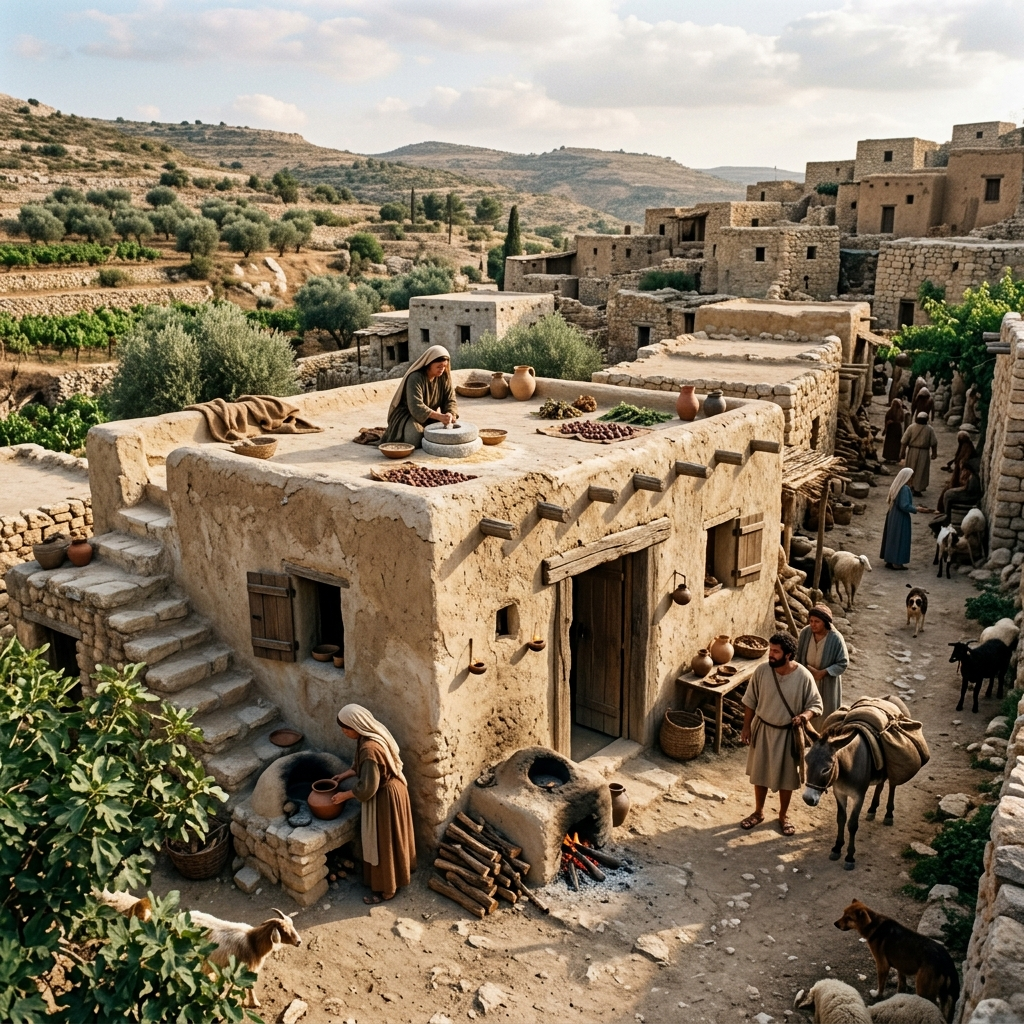
After a very public miracle in the synagogue, Jesus moved to a private setting — healing Simon’s mother-in-law of a fever (verses 38–39). Jesus was never simply performing for an audience.
This “Simon” would later be known as Peter, the future leader of the disciples, later honoured by the Catholic Church as the first Pope. The early Christian writer Clement of Alexandria noted that Peter’s wife assisted him in ministry, particularly in meeting the needs of other women.
Healing After Sundown
Verse 40 notes that people came to Jesus for healing “as the sun went down.” Under Jewish tradition and law, a new day began at sundown, not at midnight as it does for us today. This detail matters: once the sun set, the Sabbath restrictions on travel and activity lifted, freeing people to come to Jesus without violating the day of rest.
Once again, Jesus silenced the demons who tried to announce his identity (verse 41) — he wasn’t ready for that revelation to be made public yet.
Solitude With the Father
Jesus understood the value of quiet time alone with God (verses 42–44). Though most of his time was spent actively ministering among crowds, he still made space for solitude with his Father.
His closing statement in this chapter reveals his priorities clearly: “I must preach the good news of the kingdom of God in other towns too, because that is why I was sent.” Even among people who never became believers, Jesus’s miracles are often what’s remembered most. But as far as Jesus himself was concerned, preaching and teaching — apart from his ultimate work on the cross — were his most important tasks.
The Bigger Picture
Luke chapter 4 shows us a Messiah who wins his first battle not through power, but through Scripture — and who faces rejection not from strangers, but from the people who knew him best. It’s a chapter full of contrasts: quiet dependence on the Father alongside public confrontation with evil, a hometown crowd ready to kill him alongside a demon that instantly recognises who he is.
The pattern here echoes what we’ve already seen throughout Luke’s Gospel — God’s power showing up in unexpected places, unexpected people recognising the truth before the “insiders” do, and Jesus consistently choosing substance over spectacle.
As you study Luke 4, consider reflecting on how you respond to Scripture when tempted — do you reach for it the way Jesus did, or do you look for a shortcut around the harder path?