

The Book of Revelations Chapter 9
Verses 1-12
The first four seals and trumpets presented judgments directed against the earth. In the first four seals, these were the “four horsemen” bringing tyranny, war, famine, and death on the earth. In the first four trumpets, these were the natural destructions of the vegetation, seas, fresh waters, and sky.
The last three seals focused upon heaven: the cry of the martyrs, cosmic disturbances, and the heavenly prelude to the seven trumpets. The last three trumpets will speak of hell, in terms of the demons.
(1-2) Trumpet 5- In Revelation, John describes a “star” that has fallen to earth. At first, this might sound like a literal meteor, since stars and falling objects are often used to describe natural disasters. And while it could be connected to something physical, the passage makes it clear that this “star” is also a person—an intelligent being. The word fallen could mean he is a fallen angel, possibly Satan, or it might simply mean he has come down from heaven to earth.
Some argue this can’t be Satan, because the star is given the key to the bottomless pit, or Abyss, and Satan is never described in Scripture as ruling over hell. In fact, the Bible says Satan will be punished there, not in charge of it. For that reason, many believe this is actually an angel sent by God, carrying out His instructions.
The Abyss itself is described as a prison for demons. We see this idea in other parts of the Bible, like in Jude, which says certain angels are “kept in darkness, bound with everlasting chains for judgment on the great Day.” When Jesus cast demons out of a man near the Sea of Galilee, the demons begged Him not to send them into the Abyss, showing that even they fear this place.
When the angel opens the Abyss, smoke pours out like a giant cloud, and strange locusts emerge—part literal, part symbolic—showing both the terror of judgment and the spiritual reality behind it. The key detail is that the angel receives authority to open the pit from God Himself. The Abyss is not the final place of punishment—that is the lake of fire—but it is a holding place where demons are kept until God allows them to be released.
In short, this “fallen star” represents a messenger under God’s control, opening the Abyss as part of His judgment. It reminds us that even the most frightening events are not random but unfold under God’s authority and timing.
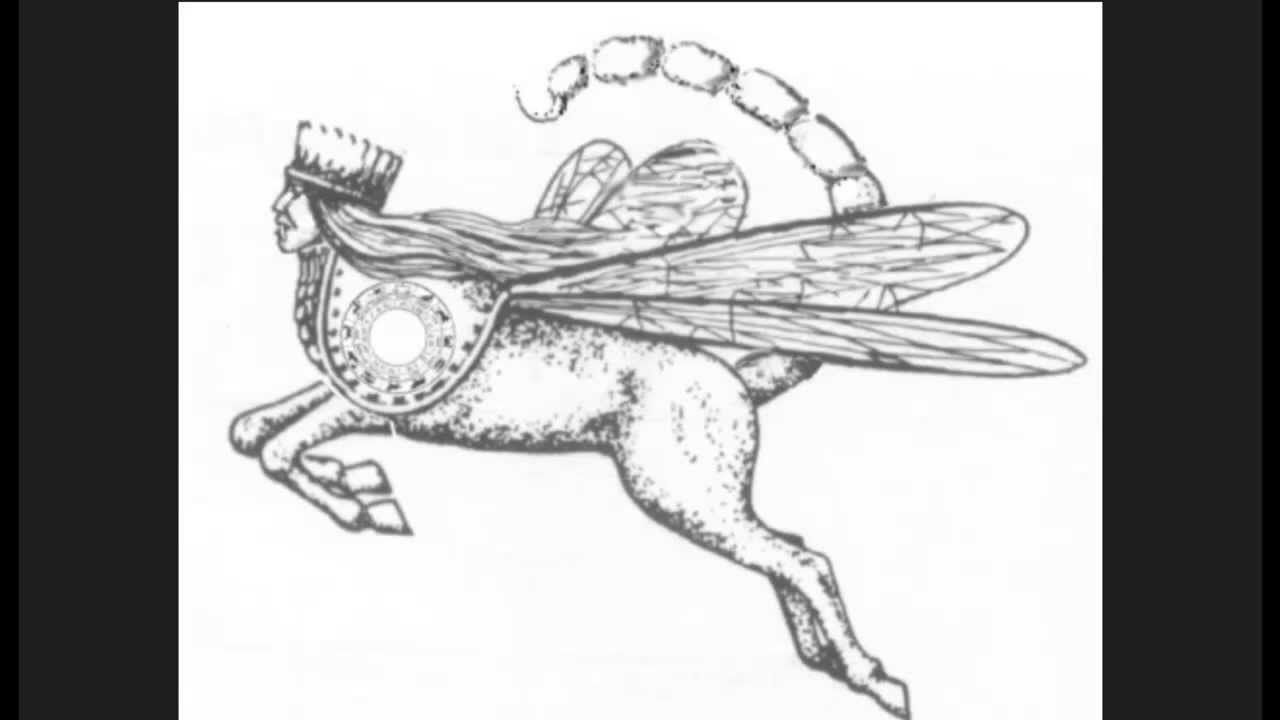
(3-11) The Bible often uses locusts as a symbol of judgment. In books like Exodus, Deuteronomy, Joel, and Amos, locusts are shown as a great disaster that ruins the land, but these locusts are even worse.
The locusts were given power to sting like scorpions, the creatures could not kill anyone, but they could sting and torment people. It would be so bad that people would wish to die, but they would not be able to.
Seeing death as a way out is a dangerous lie. Thinking that everyone can just enter Heaven is a tragic lie. There was no escape in death for them.
In the Old Testament, the term Abaddon appears in Job, Psalms, and Proverbs, consistently associated with the realm of the dead and destruction. Some scholars also suggest that it may point to the prison where fallen angels are held until the day of judgment, as described in Jude and 2 Peter. For this reason, there is ongoing debate over whether Abaddon is merely another title for Satan or a distinct being connected with the powers of destruction.
(12) The worst is yet to come.
(13-16) Trumpet 6- These are not the same four angels—or horsemen—previously described, for they have been bound until this very moment proving they must be evil as the Scripture never says any good angel is bound. Now unlike the locusts, who could only inflict pain, these angels are released with authority to kill.
Their connection to the Euphrates River is significant. In ancient times, the Euphrates marked the border of Babylon and later became the eastern boundary of the Roman Empire. While it is not a modern border of Israel, Scripture describes it as both a historical and prophetic boundary of the land promised to Israel, particularly during the reign of King David. Spiritually, the river is also tied to humanity’s earliest rebellions against God: the first sin, the first murder, the first organized revolt, and the first dictatorship.
The vision of an army numbering 200 million is staggering. Whether this represents a literal figure or simply “too many to count,” it dwarfs any military force known to history. Even at the height of World War II, the combined size of all armies on both sides reached only about 70 million—less than half of this apocalyptic host.
(17-19) Some believe the breastplates were literal armour of polished iron, gleaming like fire or burning sulphur from a distance. Others think they were multi-coloured—red, blue, and yellow—like the traditional colours worn by the Turks. Another view is that the description points not to armour at all but to their inner nature: hearts full of wrath, fury, and destruction, as if fire burned within them.
The horses had heads like lions—fierce, savage, and terrifying. This likely reflects not the animals themselves but the warriors who rode them. From their mouths came fire, smoke, and brimstone. Some see this symbolically: fire as violence and blasphemy, smoke as false teaching, and brimstone as moral corruption. Others take it literally, noting that in John’s time guns and cannons were unknown, yet during the era this vision points to, the Turks made great use of them in battle. To John, who had never seen firearms, the flashes of gunpowder and cannon fire would have looked like fire, smoke, and brimstone pouring from the horses and their riders.
(20-21) Still no repentance. This list of sins is a striking accusation against our present age. Certainly, our modern world is characterized by murders, witchcraft (associated with the taking of drugs), sexual immorality and thefts. And during a time of worldwide troubles this would only increase especially the idol worship of money as a way out.